
Market Environment
We hope everyone is enjoying the summer. Since our May update, markets have largely unfolded as anticipated. Strong corporate earnings, resilient economic growth, and continued investment in artificial intelligence infrastructure helped propel U.S. equities to new all-time highs in early June. In mid-June, markets entered a period of consolidation as investors digested a variety of concerns: geopolitical tensions, lingering inflationary pressures, AI capex spending concerns, and the great software meltdown. In our view, this pause was normal and healthy rather than a signal that the underlying bull market has run its course.
Beneath the surface, however, significant market rotation has occurred. Over the past several weeks, investors have shifted capital away from many of the market’s strongest AI-related performers and toward sectors and companies that had previously lagged. This rotation created volatility across a number of our holdings, particularly those that had benefited from strong relative performance over the last year. Recent market activity suggests that institutional repositioning and deleveraging may have accelerated this trend, contributing to heightened short-term volatility despite largely unchanged fundamental outlooks.
Last week we got some clarity on the potential causes of the extreme rotation and selling in AI related names. A large hedge fund, which was heavily invested in the AI build-out, was liquidated. The heavy selling in July was primarily a result of the funds’ liquidation, as well as the leverage restrictions put in place in the Korean stock market (One of the best equity markets in the world over the past 2 years). This deleveraging started a 40+% sell-off in memory names and spread to other AI related spaces. This rotation forced this multi-billion over leveraged hedge fund to liquidate their public stock portfolio.
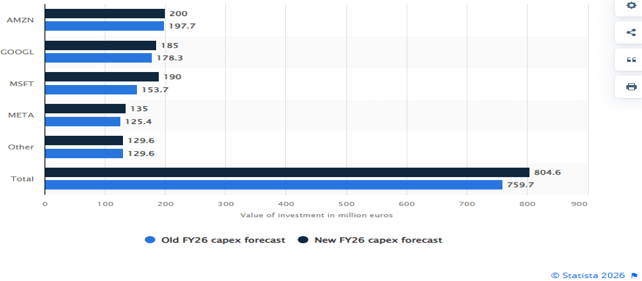
We continue to believe that the $1 trillion in dedicated hyperscaler spending, to build out the AI infrastructure, is highly stimulative to the U.S. economy and productivity. This spending and demand are unlikely to slow before the end of 2027 at the earliest. Earnings continue to improve, and demand for AI shows no signs of slowing. The debate, however, has become one of valuation and “what inning” we are in for the AI build out.
Historically, August to Mid-October is the weakest period of the year for stocks. This year could be challenging as the market grapples with Iran, elevated inflation and mid-term elections. The Fed has made clear that they are keen on fighting inflation. There are numerous issues to watch, but the equity market is likely to climb the wall of worry into year end.
Equity Outlook
The U.S. economy continues to demonstrate resilience, consumer spending remains healthy, and labor market conditions continue to support growth. While economic expansion may moderate, we do not currently see the conditions typically associated with an imminent recession. History suggests that durable bull markets rarely end simply because prices have risen.
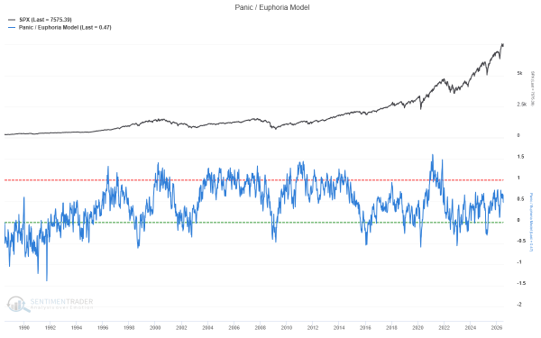
Bull markets typically end when excessive optimism becomes widespread; valuations become detached from fundamentals, and market leadership begins to deteriorate. Today, we do not see widespread evidence of those conditions. Investor sentiment has improved, but broad measures of speculation remain well below the excesses witnessed during prior market bubbles. The graph below illustrates this notion. However, we acknowledge that there are pockets of enthusiasm that are concerning (margin debt, high valuations in isolated areas of technology) so we will remain vigilant in our observations here.
 Source: SentimenTrader
Corporate earnings remain the foundation of our constructive outlook. Continued investment in artificial intelligence infrastructure—including semiconductors, networking equipment, power generation, electrical systems, cooling technologies, and data-center construction—is supporting a broad range of companies across multiple sectors. Importantly, the benefits are beginning to extend beyond large-cap technology into industrials, utilities, infrastructure, financials, and select healthcare companies.
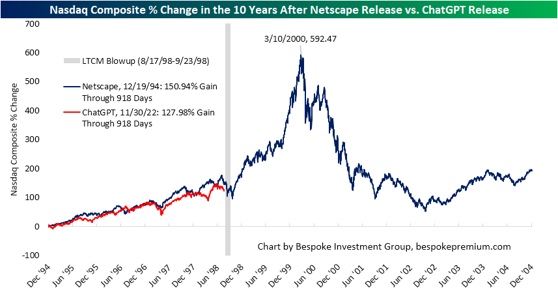
We believe this broadening of earnings growth is a healthy and supportive development for the next phase of the market advance. The graph below is an illustration of where we might be in the current cycle.
Valuations and Market Breadth
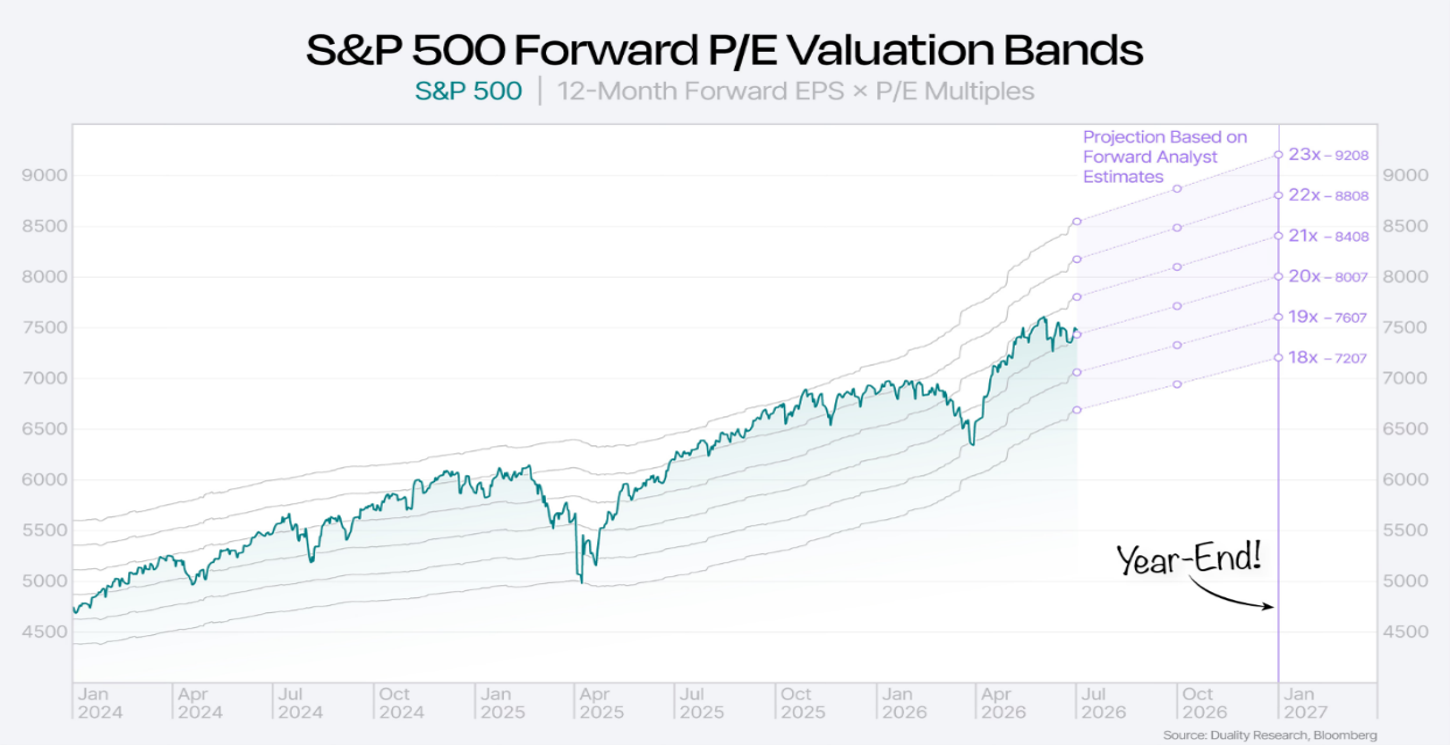
Valuations deserve attention, but context remains important. While longer-term valuations remain above long-term historical averages, elevated profitability, strong balance sheets, and continued earnings growth help justify most of that premium. Based on forward expected earnings over the very near-term, the market is fairly valued at 20x. Future market gains are likely to be driven by earnings growth than by significant valuation expansion. We also continue to see attractive opportunities outside of the largest technology companies, particularly in areas of the market that have lagged over the past several years.
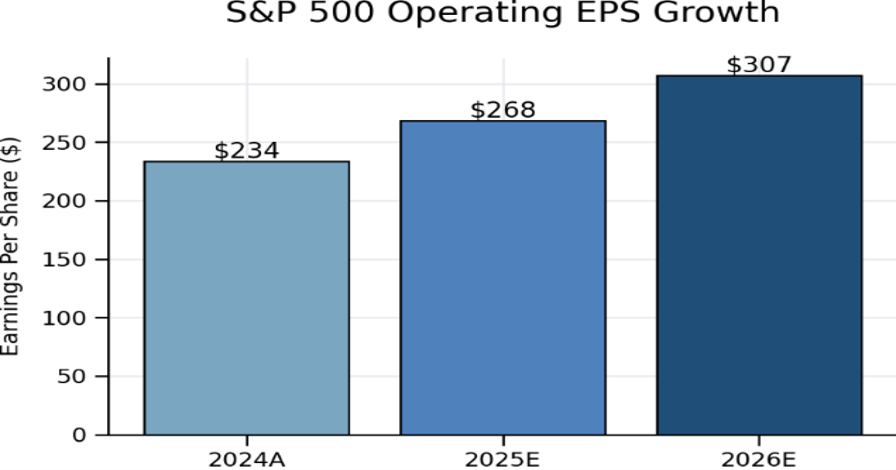
S&P 500 Earnings Growth Expectations
Consensus forecasts continue to project healthy earnings growth through 2026, supporting our view that corporate fundamentals remain constructive and that future equity returns can be supported by earnings rather than multiple expansion alone.
Fixed Income Outlook
While equity fundamentals remain supportive, current fixed income yields also present attractive opportunities for investors seeking income and diversification. We continue to believe the Federal Reserve is likely to remain on hold for much of the balance of the year. While policymakers have maintained a cautious tone, we believe they will require clearer evidence of either accelerating inflation or a meaningful deterioration in economic growth before materially shifting policy. As a result, interest rates are likely to remain within a broad trading range.
Against this backdrop, we remain constructive on fixed income. Unlike much of the previous decade, today’s bond market offers attractive income opportunities without requiring excessive credit risk. Current yields provide a meaningful source of return potential and create a much stronger foundation for future bond returns than investors enjoyed during the extended period of near-zero interest rates.
We continue to favor high-quality investment-grade bonds, municipal bonds, and intermediate-duration exposure. Corporate balance sheets remain generally healthy, and while credit spreads are relatively tight, higher-quality fixed-income investments continue to offer attractive risk-adjusted return potential.
We believe bonds are once again positioned to serve their traditional role as both an income-producing asset and an important portfolio stabilizer.
Portfolio Changes Since Late May
As the market extended its rally in late May, we initiated exposure in companies (APH, CMI, ETN, F, TSLA,)
and ETF’s (AIPO, OIH, POWR) Subsequently, in early June, we pruned the portfolio from areas that we felt may be out of favor in the current environment, or don’t seem to be leveraged to the themes we currently favor. These companies were EQT, CEG, and VST. The ETF’s / mutual funds in this category were QQQ, SPY, GDX, ILF, EWZ, GRHIX, MGNR, and NLR. As a result of these changes, the portfolio remains tilted towards companies that we believe are most likely to benefit from continued economic expansion, increasing infrastructure investment, and the broad adoption of artificial intelligence technologies. At the same time, we have sought to maintain diversification and manage risk across sectors and asset classes.
Key Risks
While our outlook remains constructive, we continue to monitor several risks, including persistent inflation, elevated fiscal deficits, geopolitical tensions, and any meaningful deterioration in labor markets or corporate earnings. None of these issues currently appear to be affecting our base case, but they do warrant ongoing attention.
Conclusion
Looking toward year-end, we remain constructive on both equities and fixed income. Corporate earnings continue to grow; economic conditions remain broadly resilient, and current bond yields provide attractive income opportunities that were unavailable for much of the past decade. While risks remain, we believe the weight of the evidence continues to favor patient, long-term investors.
We expect to use the current consolidation to selectively add to favored positions as opportunities develop. We are also looking for evidence that market leadership continues broadening beyond technology into financials, industrials, utilities, infrastructure and select health care companies. Broader participation would reinforce our confidence that this bull market remains healthy and durable.
As always, we will allow the markets and the data to guide our decisions rather than attempting to predict every headline or short-term fluctuation. Successful investing is not about forecasting the future perfectly; it is about responding thoughtfully and consistently as conditions evolve. We appreciate your continued confidence and welcome the opportunity to discuss your portfolio or our outlook in greater detail.
